
We’ve noticed a pattern in many of the organizations reaching out for support lately: most are fast-growing companies that have either just hit or are racing toward the 50-employee mark.
Many of these companies started with just a few founders, a handful of employees, and a vision of growing into thriving operations. But while that trajectory is exciting, it often masks critical HR vulnerabilities.
Even when an organization is small enough that it might not yet make sense to hire an internal HR position, as soon as you start to grow your team, there are critical HR functions that need to be addressed: finding people, evaluating them, paying them, training and engaging them. Much of the cultural and team-related HR functions can be informal to start, but the administrative and compliance aspects are critical from the get-go.
It takes time to put systems in place, and it can seem like extra work getting in the way of ‘what you really do’—but if you invest in getting your HR systems in place (when done well) they are there to help you scale, not be in your way.
On the flip side, when organizations scale without the necessary HR infrastructure, entrepreneurs often find themselves in a stranglehold. What once felt manageable becomes an administrative nightmare, creating stress that doesn’t stay isolated to paperwork; it permeates operations and eventually the culture itself.
HR gaps that were manageable when the team was small often become critical risks if left unaddressed as you grow.
If you find yourself in this position as an entrepreneur, take heart. You are not alone. Below are some key considerations and a practical plan of attack to help you regain clarity, reduce stress, and build a healthy foundation for sustainable growth.
BE AWARE OF EMPLOYMENT & TAX LAW
We get it; compliance and administration are not what excites most entrepreneurs to get into business. You don’t need to love it, but please do not let legal fees and payroll tax penalties be what gets in the way of your success. Even if you are a mom and pop shop or just hiring your child/friend/neighbor to help out occasionally, it’s important to make sure you are compliant with relevant laws.
As soon as you start bringing on help, it is good to have an expert audit your processes to see if there are any liabilities. Do you know the difference between what constitutes a contractor vs. someone who should be on payroll? Who is responsible for taxes and benefits? You should be able to not only understand what it takes to be compliant, but also to clearly communicate requirements to your employees/contractors so they can be too.
ESTABLISH HANDBOOK ADMINISTRATION EARLY
If there is one foundational HR tool every growing organization needs, it is a well-crafted employee handbook.
A handbook:
- Sets clear expectations and outlines key policies
- Creates consistency as your organization grows
- Provides critical legal protection
This is not something to delay. Get a handbook in place early—and then use it! Ensure it is provided to and reviewed with each employee at hire, managers are trained to operate accordingly, and that it is enforced. It is also good practice to review it regularly and have it grow with your organization.
PRIORITIZE REQUIRED TRAINING
Certain trainings, such as sexual harassment prevention and safety, are not optional. They are essential for compliance, protection, and culture. Training communicates your values clearly and reinforces accountability. When done well, training becomes a culture-builder rather than a checkbox.
AUTOMATE PROCESSES EARLY
One of the most common frustrations we see among entrepreneurs is trying to do everything at once. Leadership carries many responsibilities, and taking on too much too quickly often leads to burnout.
Instead, focus first on what will save you the most time and money: automating your recruitment and onboarding processes.
After the organization has grown and recruitment is a more regular occurrence, HRIS systems, while more costly than excel sheets and internal folders, can speed up the process. There are solutions for any size company, with more or less functionality as you may require/can afford; you don’t need to spend big right away.
Many leaders assume this is complicated. It isn’t.
With a capable project manager and an HR partner who knows what they’re doing, these systems can be implemented efficiently and effectively.
Why This Matters
Onboarding often requires collecting significant documentation—Form I-9s, licenses, identification, certifications, and more. All of this can be automated through simple forms and workflows to reduce errors, save time, and ensure compliance.
ORGANIZE COMMUNICATION
Organic growth can lead to disorganized reporting structures and ad hoc communication patterns resulting in missed expectations, errors, and inefficiencies. As you get more complex, start looking at centralizing communication and coordinating workflow.
This doesn’t need to be a big investment. While you can look into PM software options, it can sometimes be as simple as creating email lists, regular (intentional!) meetings, and/or dashboards that keep everyone focused on the goals at hand and communicate expectations.
UNDERSTAND THE PROS AND CONS OF A BEING A SMALL BUSINESS EMPLOYER
As an owner, you have a lot invested in the company. You are likely passionate about what you offer and are motivated to see the company grow and provide a return some day. Of course you want people who are all in it with you, but do you know what you have to offer them?
Rewarding Employees
If you are a startup with good funding and a lot of capital, it can be easier to pay your employees well; if you are bootstrapping, it may be a bit harder. What else can you offer? flexible hours? hybrid or WFH options? an interesting work environment or unique projects? ownership shares? You should be able to articulate this in the recruitment process.
Managing In Flat Hierarchies
Being a small organization means less distance between any individual and the key decision makers. This can make employees feel like they have a greater impact almost immediately! It also means that there are less promotions to hand out and therefore less options for ‘moving up’ a career ladder. So how can your employees feel engaged enough to stay and not feel stagnant?
You may look at ways to expand the scope of their responsibilities, their level of expertise, etc… so they feel they are developing professionally, or have a path for them to grow with the company if you are scaling. If unable to provide career growth options, be ready to deal with turnover and have solid onboarding and training processes in place to get the most out of new employees quickly.
Likewise, with a smaller team, there rarely is such a thing as ‘not my job’. There are just too many hats and not enough heads. This can be fun for some and frustrating for others. As you recruit early hires, they often need to be people willing to take on multiple functions.
This is true as you build your HR function as well. At first HR may be outsourced or a responsibility tacked on to another role or two (such as operations, finance, tech, safety, office admin, etc). Then as you build it, you will need a generalist who can manage the full cycle of HR, later hiring more specialized roles as complexity increases.
One final challenge is to be aware of how lean you are operating. In a small business, there is not much margin for waste, but it is equally important to watch for bottlenecks also. What happens if someone goes on vacation, gets sick, or suddenly accepts a job elsewhere? Your team needs to be able to cover key responsibilities without burnout. Have a plan to manage through cross training and/or contractors before you find yourself in crisis mode.
Changes in Growth
If you are fortunate to be in a growth mode, be aware that the people who came earlier may be used to working in a more intimate environment and more closely connected with the founder. As you hire and re-organize to manage complexity, these early hires who first reported to the founder may suddenly find themselves under a new manager, and it can feel like a step down. Or maybe they were one of those who enjoyed managing multiple functions but now they need to specialize, and it feels like things are being taken away from them (for better or worse). They might leave; that may need to be ok. But if you want to keep them around, then it is especially critical to find ways to show gratitude and be intentional about communicating how these changes do not reflect their work and value, but rather the demands of a growing company.
The culture of an organization changes with growth also. While leaders always influence an organization, the smaller you are, the stronger the gravitational pull of the owner/founder is. Early hires usually get this and are on board with how he/she operates, knowing how to navigate those passions and eccentricities—or they leave. As an organization grows, there is an opportunity to build something beyond that—a culture and corporate brand that is less connected to an individual’s strengths, but also less limited by their weaknesses.
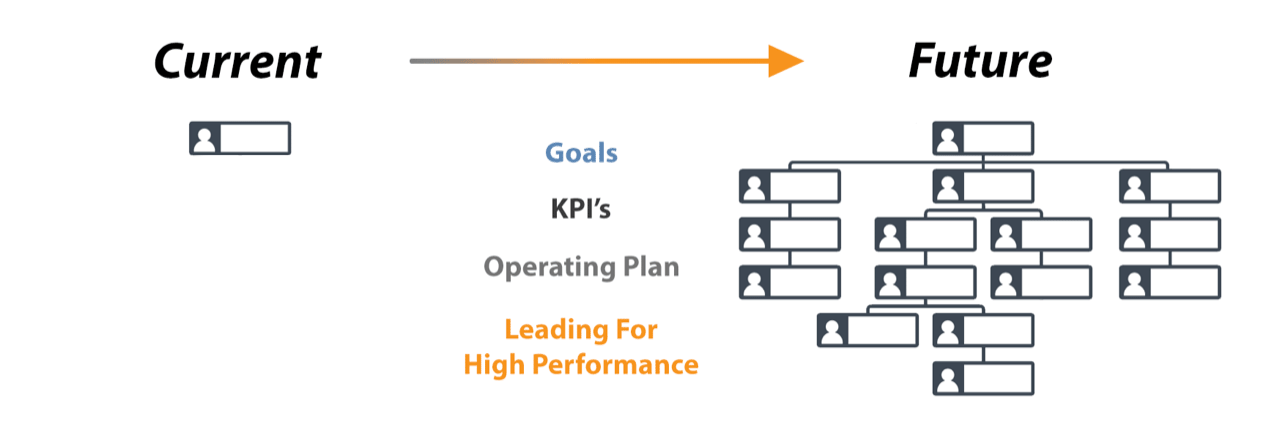
FUTURE CAST YOUR ORGANIZATION
Entrepreneurs are often so focused on today that tomorrow arrives without warning.
Take intentional time to:
- Review your current workforce
- Create an organizational chart for today
- Build a second chart for where you are heading
Future casting allows you to plan strategically and avoid costly reactive decisions.
CREATE CLEAR JOB DESCRIPTIONS
Job descriptions are critical tools, not formalities.
They are essential for:
- Clarifying expectations and priorities
- Holding employees accountable, serving as a reference during evaluations
- Recruiting effectively
- Remaining legally compliant
You can explore deeper insights on why job descriptions matter in our post “Job Descriptions Make a Difference.” This article walks through how clear job descriptions align team members to your mission and vision.
Integrate — Job Descriptions Make a Difference
EXPLORE BENEFITS FOR YOUR TEAM
One area many entrepreneurs delay is employee benefits, often because they assume benefits are expensive, complicated, or only necessary for larger organizations. In reality, benefits are a powerful tool for both retention and culture, even for small teams. Benefits communicate care. They tell your employees, “You matter here.”
Why This Matters
As organizations grow, expectations shift. Employees begin to evaluate not just compensation, but the total employment experience. Thoughtfully selected benefits can:
- Improve retention
- Increase engagement
- Support employee well-being
- Strengthen your employer brand
Benefits do not have to be overwhelming. Start with what makes sense now and build intentionally.
Where to Begin
Consider exploring:
- Health insurance options aligned with your size
- Voluntary benefits like life or disability coverage
- Paid time off and leave policies that support rest
- Retirement or savings options
To support you further, check out our podcast that dives deeply into this topic:
Podcast: Scaling Up — Navigating HR & Benefits from 5 to 500 Employees
This episode features practical strategies for introducing benefits, designing flexible coverage options, and building a benefits plan that protects your team while supporting growth.
YOU CAN DO THIS
Growth should feel energizing, not exhausting. The HR challenges that surface as your organization scales are not signs of failure; they are growing pains and signals that it’s time to strengthen your foundation.
By putting the right systems, policies, and people practices in place early, you protect not only your organization, but yourself and your team. Thoughtful HR strategy allows you to lead with clarity, confidence, and purpose, so your organization can grow sustainably without breaking under its own success.
Don’t wait for overwhelm, frustration, or issues to reveal the cracks in your HR strategy!
Contact us today to partner with us in implementing high-performance programs that help attract and retain top talent. You and your employees will be glad you did. E-mail us here.
Mark A. Griffin is president and founder of IHN HR. Connect with him on LinkedIn and Twitter.